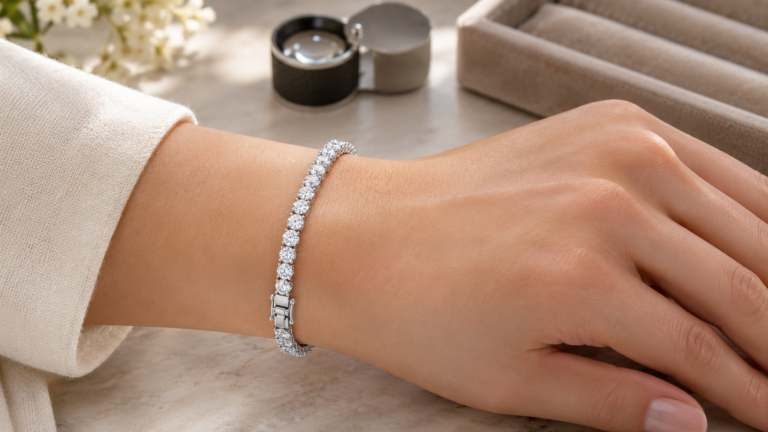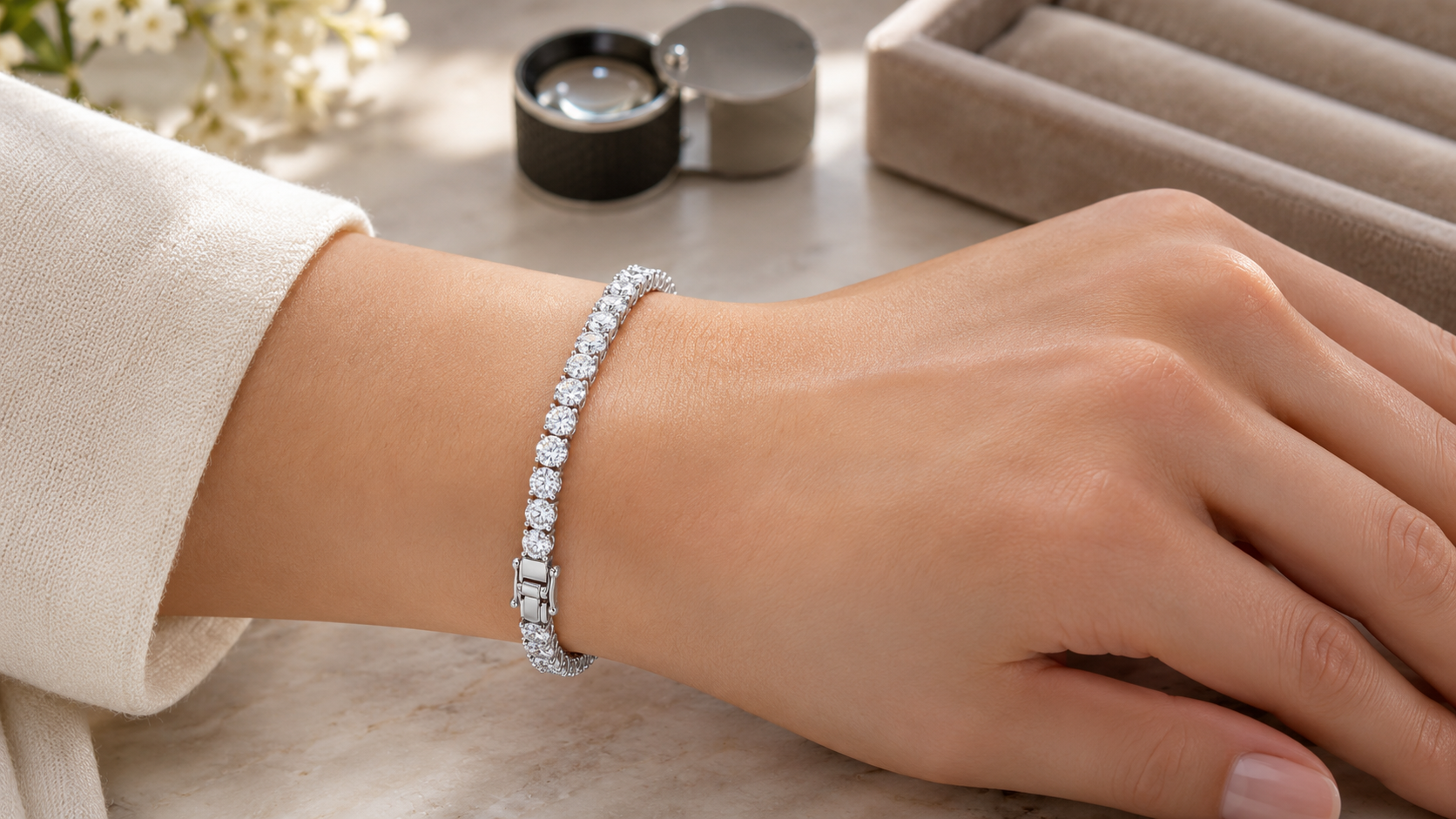
A diamond bracelet can look flawless under showroom lighting and still be awkward to wear. One stiff link, a clasp that takes several attempts to close, or a little too much movement around the wrist may become more noticeable than the sparkle after a few weeks.
That matters when choosing a lab-grown diamond tennis bracelet. Its appeal comes from a continuous line of stones, but its quality depends just as much on the small parts that hold those stones together.
First, Know What Is Actually Being Sold
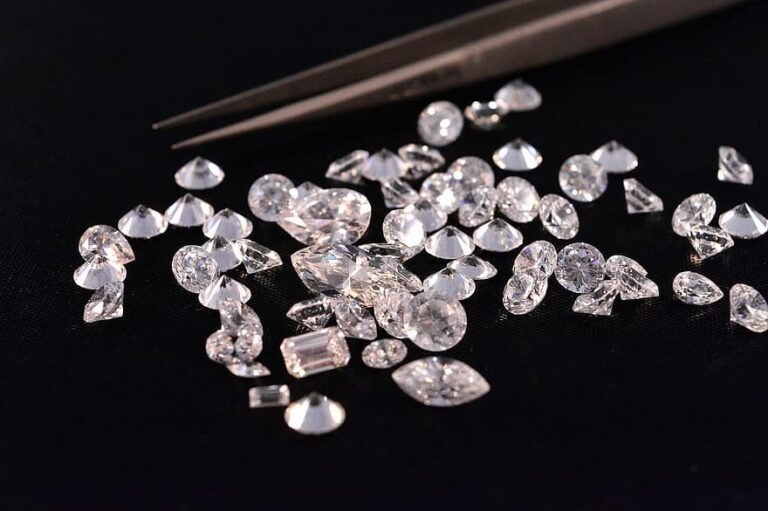
A lab-grown diamond is a diamond, not a diamond lookalike such as cubic zirconia or moissanite. The Gemological Institute of America (GIA) explains that laboratory-grown and natural diamonds have essentially the same crystal structure and closely similar physical and optical properties. The distinction is their origin: one grows through a controlled technological process, while the other forms naturally.
Laboratory-grown stones can be produced using high-pressure, high-temperature (HPHT) or chemical vapour deposition (CVD) methods. These terms describe the manufacturing process, not the bracelet’s craftsmanship.
Product descriptions should clearly identify the diamonds as laboratory-grown. Check whether a listing also explains the metal, the combined diamond weight, the bracelet’s finished length and any supporting identification or grading information. Ask what any supplied grading or identification documents actually cover.
The Line Should Move as Smoothly as It Shines
A traditional tennis bracelet is a flexible row of individually set stones. It needs to bend naturally around the wrist without forcing the settings apart.
If you can try a bracelet on, let it rest across your open palm. The links should follow the curve rather than sticking out at odd angles. In daylight, check whether the stones are evenly matched and the settings aligned.
A headline carat figure can distract from those details. Total carat weight describes the combined weight of the stones, not the weight of each diamond. Two bracelets with the same total carat weight may look different because of their lengths, stone counts and setting styles.
Ask for clasp and side-view photographs, not just the main product image.
Settings Affect Comfort as Much as Appearance
Prongs Expose More of Each Stone
Prong settings use small metal claws to secure each diamond. They can give a bracelet an airy appearance, with plenty of light reaching the stones. But the finishing matters. Rough or poorly aligned prongs may catch on knitted clothing and deserve attention from a jeweller.
Bezels and Channels Create a Different Feel
A bezel wraps a metal rim around a stone, offering more protection around its edge. A channel setting holds stones between metal sides. These styles can create a smoother profile, although they change how much metal is visible.
Someone who wears delicate fabrics may prefer a smoother design; another buyer may favour the open look of prongs.
The Clasp Deserves a Proper Inspection
A fine bracelet is only useful if it stays on the wrist. Ask the seller to demonstrate how its clasp closes, then practise opening and fastening it yourself.
Some tennis bracelets use a box clasp with an additional safety catch. Check that the main fastening engages positively and that any safety feature works without being bent or forced. A catch that feels uncertain in the shop will not become reassuring at home.
A well-fitted bracelet should move gently without sliding repeatedly towards the hand.
Fit Is Not a Guessing Game
Bracelet lengths may be shown in centimetres, inches or broad labels such as small and standard. A measurement is more helpful than a label.
Use a flexible tape, or a strip of paper marked and measured against a ruler, around the part of your wrist where the bracelet will sit. Then compare your measurement with the seller’s finished bracelet length. GIA suggests a fit that allows roughly one finger between the bracelet and wrist: enough room for comfortable movement without excessive slipping.
Try it with your arm lowered, and beside your watch if you plan to wear both.
Ask whether links can be added or removed, whether resizing changes the price, and what happens if the first size is unsuitable.
The Metal Changes the Long-Term Experience
White gold, yellow gold, rose gold and platinum can all work beautifully in a tennis bracelet. Their upkeep is not identical.
White gold is often rhodium plated for a bright white finish, and that plating can wear with use. Yellow gold avoids that particular maintenance issue, while platinum develops a surface patina that some people like and others choose to polish.
A 14ct gold bracelet and an 18ct gold bracelet differ in gold content, but neither label replaces an assessment of workmanship.
If you have a history of reacting to jewellery metals, ask about the complete alloy composition rather than relying on the colour of the metal.
Compare the Whole Bracelet, Not Just the Price
Lab-grown diamonds can offer different price options from mined stones, but a lower price alone does not establish good value. Stone quality, matching, total carat weight, metal choice, labour and finishing all influence what a buyer receives.
When comparing a lab diamond tennis bracelet with other designs, check the full specifications rather than judging by the first product photograph. Ask whether prices are in NZD, what delivery or insurance arrangements apply and which services are available after purchase.
A useful comparison puts like beside like: similar length, diamond weight, metal and construction. Only then does the price difference start to mean something.
Environmental Claims Need More Than a Label
The discussion around lab made diamonds often turns to environmental impact and responsible sourcing. Those are reasonable questions, but laboratory origin by itself is not proof that a product has a particular environmental advantage.
Diamond production uses resources, and the environmental footprint depends on factors such as energy sources, manufacturing processes and the supply chain. The metal and the jewellery-making process also matter. Claims such as ‘carbon neutral’, ‘sustainable’ or ‘eco-friendly’ should come with specific, relevant evidence.
New Zealand’s Commerce Commission advises businesses to support environmental claims and explain precisely what a claimed benefit applies to. As a shopper, you can ask what has actually been measured and whether an independent assessment is available. A clear, limited answer is more useful than a sweeping promise.
New Zealand Buyers Should Check the Small Print
Buying online gives access to more styles, but it also makes it easier to miss practical details. Before paying, confirm the seller’s trading location, currency, delivery estimate, return conditions and responsibility for repairs. With an overseas seller, ask whether import costs could apply and how a return would be handled.
The Consumer Guarantees Act provides protections for eligible purchases from businesses trading in New Zealand, including requirements around acceptable quality and matching descriptions. The Fair Trading Act also addresses misleading statements about products and pricing. Rights can depend on the circumstances, and enforcing them against an overseas business may be harder.
Keep your invoice, product description and written warranty terms.
A Little Care Protects the Details
Diamonds are hard, but the metal holding them can still wear or bend. Remove the bracelet before activities likely to knock or pull it, including vigorous exercise, gardening and heavy cleaning.
For ordinary cleaning, follow the jeweller’s advice. For many diamond and precious-metal bracelets, a little mild dishwashing liquid in warm water and a very soft brush are suitable, followed by careful rinsing and drying. Avoid experimenting with strong chemicals or mechanical cleaning equipment without confirming that they are safe for the entire piece.
Have a jeweller inspect catching prongs, uneven links or a loose clasp.
A good tennis bracelet should feel uncomplicated once it is on. Its diamonds may be the first thing people notice, but comfortable sizing, reliable fastenings, thoughtful settings and clear product information are what make it a piece worth reaching for again.