
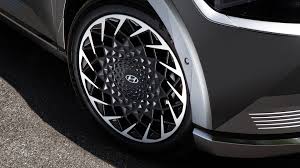
Most EV owners do everything right. They watch their speed, manage their charging habits, and precondition the battery on cold mornings. Then they fit standard tyres and undo a significant portion of that effort without realising it. The tyre is the single point of contact between your EV and the road, and it is the one efficiency variable most owners never examine.
For New Zealand drivers, managing longer distances between charging stops on chip-seal roads, which create more rolling friction than in most overseas markets, results in real kilometres lost on every trip.
Here is exactly how EV tyres make a measurable difference to your range, efficiency, and your wallet.
#1: Rolling Resistance: Where Efficiency Is Won or Lost
Every tyre deforms slightly as it rolls. On an EV, that energy loss comes directly from the battery and shows up in your watt-hours per kilometre (Wh/km) consumption figure. EV-specific tyres use specialised rubber compounds that minimise the energy loss at the contact point. Switching to efficiency-focused EV tyres delivers a measurable improvement in range, and EV owners who revert to standard rubber consistently report a noticeable drop in how far their vehicle travels on a full charge. That gap does not close regardless of how carefully you drive.
New Zealand’s chip-seal road surfaces create significantly more rolling friction than the smoother tarseal found in most overseas markets. For Kiwi drivers, that means the rolling resistance advantage of EV tyres delivers greater real-world benefit here than almost anywhere else.
#2: Load and Torque: Why Standard Tyres Wear Out Faster
Two things about your EV are silently wearing through standard tyres faster than you expect, and most dealers never mention either at the point of purchase.
The first is weight. EVs carry considerably heavier battery packs than equivalent petrol vehicles, creating a sustained load that standard sidewalls are not engineered to handle without excessive flex. The second is instant torque delivery, which places far greater stress on tread compounds during acceleration than a petrol engine ever would. EV tyres address both through reinforced sidewalls, higher load ratings, and stiffer tread blocks that resist compound degradation under repeated torque stress. The result is a longer-lasting, more efficient setup for a vehicle that standard rubber was never designed to carry.
#3 Tyre Noise: A Sign of Energy Being Wasted
Without engine sound to mask it, tyre roar becomes the dominant cabin noise on an EV at speed. For many new EV owners, this is the first surprise. They expected near-silence and got road noise louder than their previous petrol vehicle.
What most do not realise is that noise is not just a comfort issue. It is energy being lost at the tyre-road interface through vibration and friction rather than converted into forward motion. EV tyres minimise vibration at the contact patch through specialised tread patterns and internal foam inserts, meaning more of the vehicle’s energy goes into driving forward rather than being lost as noise and heat at the road surface.
#4: Tyre Lifespan and What It Actually Costs You
EV owners running standard tyres are not just losing range. They are replacing tyres more frequently than necessary. The combination of additional vehicle weight and instant torque delivery accelerates tread wear in ways that are not immediately visible but are reflected in replacement cycles arriving a season earlier than they should.
Over the life of an EV, that difference is a meaningful cost. Choosing correctly specified EV tyres from the outset is not a premium decision. For most owners, it is the more cost-effective one over time, and the savings compound with every replacement cycle that does not arrive ahead of schedule.
What to Look for When Choosing EV Tyres?
Not all tyres marketed as EV-compatible are equal. The key markers to look for are a low rolling resistance rating, the measure of how much energy the tyre loses as it rolls, a load index that meets or exceeds your vehicle’s original specification, and an XL or HL marking, which indicates the tyre is rated for the additional weight an EV carries.
In the New Zealand market, options range from premium compounds such as the Michelin E Primacy at the higher end to value-focused alternatives such as the Warrior EV range for owners who need reliable performance at a more accessible price point.
Closing Thoughts
EV tyres lower Wh/km consumption, extend tyre life, reduce energy lost as road noise, and deliver a measurable improvement in real-world range. Every kilometre driven on the wrong tyres is a kilometre paid for twice, once at the charger and once at the tyre shop ahead of schedule.
For Auckland EV owners unsure whether their current tyres are working with their vehicle or against it, a free tyre safety check, including a pressure assessment from a Henderson-based EV tyre specialist, is the most direct starting point. Bring your current set in and find out what they are actually costing you before the next replacement bill does.